Boston Beer Earnings July 23: Twisted Tea Declined Too, Which Answers the Only Question That Mattered
Boston Beer's Q2 2026: revenue of $568.3 million fell 3.3% and missed, diluted EPS of $4.96 fell 8.9%, shipments dropped 4.5%, and Twisted Tea declined alongside Truly and Samuel Adams.
The Answer Was No. Twisted Tea Did Not Outrun the Seltzer Slide.
UPDATE (August 7, 2026): Boston Beer reported after the close on July 23, and the single question this page posed got a clean, negative answer. We asked whether Twisted Tea was still growing fast enough to paper over the long decline in hard seltzer. It is not, because Twisted Tea itself declined, alongside Truly, Samuel Adams and Hard Mountain Dew. Only Sun Cruiser and Angry Orchard grew.
The numbers followed. Revenue of $568.3 million fell 3.3% from $587.9 million, worse than the roughly $579 million and 1.5% decline modelled below. Diluted EPS of $4.96 fell 8.9% from $5.45 and came in just under the $4.99 expected. Net income dropped 14.7% to $51.6 million. Shipments fell 4.5% in the quarter and 5.6% year to date.
This page said the EPS line said margins were fine while the revenue line said demand was not. That still holds. Gross margin improved 60 basis points to 50.4% despite lower volumes. A company can defend price and mix all the way down; it cannot do so indefinitely while its single growth engine turns negative in the quarter that sells the most beer.
Read the full-year guidance carefully, because the two versions describe different companies. Boston Beer guided 2026 GAAP EPS to a loss of $6.23 to $4.23 and non-GAAP EPS to a positive $8.50 to $10.50. The gap is litigation expense from a supplier dispute, and the low end of the GAAP range is what that litigation could cost. Quoting either number without the other misrepresents the year.
More on Earnings: Options Scorecard: The Week of August 10, Graded (35 Calls, 51% Right) →
TL;DR
- Boston Beer reports after Thursday's close, July 23, with the Street at roughly $579 million in revenue, down about 1.5% on the year, and near $4.99 in EPS.
- Q2 is the seasonally huge quarter (summer sells beer and hard tea), so a revenue decline here is the whole worry: the top line is shrinking in its best selling window.
- The single question: is Twisted Tea still growing fast enough to paper over the long slide in hard seltzer. The EPS line says margins are fine; the revenue line says demand is not.
- Read and trade below.
The Board
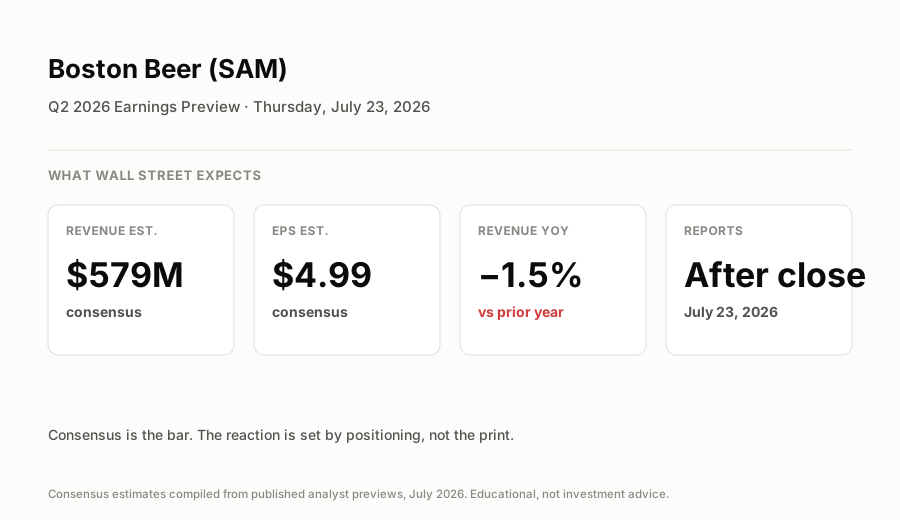
A revenue decline in the peak summer quarter is the whole worry.
One Growth Engine, One Melting Ice Cube
Boston Beer is really two companies now. Twisted Tea is the growth engine, a genuinely dominant brand still taking share of the flavored-alcohol shelf. Truly and the rest of the hard-seltzer franchise are the melting ice cube, past their 2021 peak and still bleeding volume as the seltzer fad normalizes.
A 1.5% revenue decline in the peak summer quarter means the math has flipped the wrong way: the ice cube is now melting slightly faster than the engine can grow. That is a very different story than the one the stock told on the way up.
Why The EPS Is High And The Story Is Still Hard
Do not let the $4.99 fool you into a bull case. Boston Beer has spent two years cutting costs, dialing back the seltzer overproduction that wrecked margins, and buying back stock. That protects earnings per share even as the top line stalls. It is quality management of a demand problem, not a demand solution.
The read-through matters beyond one beverage maker: this is the same rotation into defensive consumer names playing out at the product level, where staples that can hold price are rewarded and volume-losers are not. Boston Beer needs to prove it is the former.
The Options Angle
- SAM is a low-float, high-dollar stock, so options premiums are chunky and the shares gap. A summer print that confirms Twisted Tea's momentum can squeeze, because sentiment is bearish and positioning is light.
- Trade the volume line, not the EPS line. Depletions and shipments (how fast product moves off shelves) tell you demand. EPS tells you how well they are managing the decline, and the market re-rates on the former.
- A covered call fits a "fairly valued, going nowhere" thesis. If you think SAM grinds sideways while the two brands fight to a draw, renting out upside collects income while you wait for the next new product to matter.
The One-Line Read
Boston Beer's Thursday print is a race between Twisted Tea and a melting seltzer business in the one quarter that should flatter both, so watch the volume trend, not the healthy-looking EPS, because margins can mask a demand problem for exactly as long as it takes the top line to force the issue.
Next up:GDP, Wednesday at 8:30am ET →
More on Earnings
Updated Every Saturday
The Week Ahead
Every earnings date, Fed event and setup for the current trading week, on one page.
Refreshed Weekly
Earnings Calendar
Who reports next, when, and what consensus and the whisper expect.
The Week-Ahead Brief
Don’t miss next week’s setups. Get the Saturday brief.
Latest issue, Aug 17“The consumer cracked on Friday. Six retailers answer for it this week.”
Every Saturday: next week’s earnings dates, Fed days and the trades worth watching, from the same desk that writes the week-ahead hub. Free, built for retail investors.