Intel Earnings Preview: Down 21% in a Week, the Bar Is Now on the Floor
Intel reports Q2 2026 earnings expected July 23, two weeks after a 21% weekly collapse. When expectations are this dead, the earnings math flips: INTC has the lowest bar of the season. Whether that makes it a buy, and the options play.
Read the full Intel Q2 2026 breakdown
UPDATE (July 29, 2026): Intel has reported, and the lowest-bar thesis was right. Revenue of $12.9 billion beat the ~$12.6 billion estimate and adjusted EPS came back to breakeven at $0.02 against a small expected loss. The line that mattered was the Foundry operating loss narrowing to $2.3 billion from $2.9 billion, the first sequential improvement in the bleed. INTC popped roughly 9% after hours: exactly the dead-positioning bounce described here. It remains a trade rather than a turnaround. Where it stands since: is Intel a buy after the pop?
More on $INTC: Intel's $20 Billion Stock Offering: Upsized From $15bn, Priced At $95, 5x Oversubscribed →
TL;DR
- Intel reports Q2 results expected Thursday, July 23, after the close, exactly two weeks after losing 21% in a single week in the July chip massacre.
- The whisper economy that's been executing crowded AI names on good prints works in reverse here: INTC's expectations are so dead that "less bad" clears the bar.
- The asymmetry is the entire thesis: nobody owns it, everyone's given up, and options price ±8% on a name that just proved it can move 21% in a week.
- This is a trade, not an investment. The distinction, the history, and the structure below.
The Lowest Bar of the Season
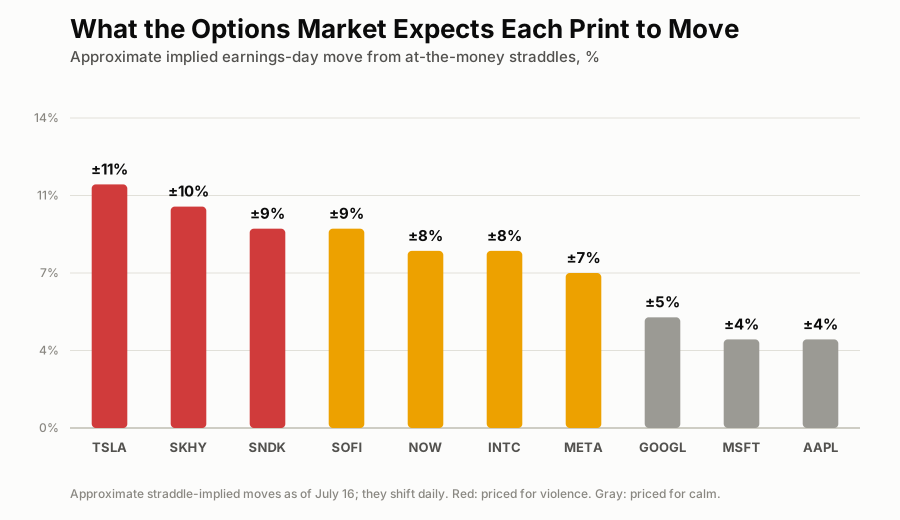
INTC's ±8% sits mid-pack on the risk board, on the name with the most one-sided positioning of the group.
This month's earnings regime has one rule: the reaction is set by positioning, not results. Broadcom tripled its AI revenue and fell because everyone owned it. Abbott beat modestly and jumped 11% because nobody did. Now apply the rule to Intel: down 21% in a week, down massively from its highs, abandoned by growth funds (no AI story), abandoned by value funds (foundry losses), and trading with the season's most one-sided expectations. Every seller who wanted out had two full weeks and a 21% discount to leave. Who's left to sell the miss?
That's the whole INTC earnings thesis, stated plainly: the print doesn't have to be good, it has to be survivable, and the market's own positioning does the rest.
What "Survivable" Means on July 23
- Foundry losses shrinking, or even just not growing. The foundry bet is why value investors fled. The narrative doesn't need profitability; it needs a trajectory. Any quarter-over-quarter improvement in the foundry bleed is the headline the bounce runs on.
- Gross margin holding. Intel's margin has been the multi-year horror show. Stabilization at these levels, after this much price damage, reads as a floor.
- No new disaster. No fresh delay, no guide-down blaming "AI spending digestion" (the phrase that started the 21% avalanche). Intel prints have a habit of finding new ways to disappoint; the bear case is simply that habit continuing.
Notice the bar: not one of those three requires good news. That's what two years of failure and a 21% week buy you.
The Case Against the Bounce
Cheap stocks get cheaper, and Intel has spent three years proving it. The July collapse ran on a real fear (AI spending bypassing Intel entirely), CXMT's rise threatens the commodity segments Intel touches, and every "the bar is low" bounce thesis on this name since 2024 has eventually been donated back. If the print delivers a genuine new negative (a foundry customer loss, another node slip), ±8% down is the floor, not the move. This name earns its distrust.
Which is why structure matters more than conviction here.
The Options Angle
- The trade: call spreads, not stock, not naked calls. Buy at the money, sell 12-15% higher, four to six weeks out. The dead-positioning bounce, if it comes, is sharp and capped; the spread captures exactly that shape and caps your donation if Intel finds a new way to disappoint.
- Fund it by selling the fear that already happened: put spreads well below the July low. IV is still fat from the 21% week. Selling puts 10% under a level that just absorbed maximum capitulation, inside a defined spread, monetizes panic that's two weeks stale.
- Do not hold through the print unhedged in either direction, and do not size it like MSFT. This is a lottery-ticket setup with good odds, and lottery tickets get lottery sizing.
Sooo... The Bounce or the Trap?
The bounce, sized like you're not sure. Positioning this dead plus a bar this low resolves upward on anything short of fresh catastrophe, and that's a bet worth structured money. But Intel has broken more "it can't get worse" theses than any stock of its generation, so take the trade the math offers and refuse the conviction the chart hasn't earned. Spreads, small, July 23.
Next up:GDP, Wednesday at 8:30am ET →
More on $INTC
$INTC · 2026-08-10
Intel's $20 Billion Stock Offering: Upsized From $15bn, Priced At $95, 5x Oversubscribed
$INTC · 2026-07-26
Is Intel a Buy After the 9% Earnings Pop? Relief Bounce vs Real Turnaround
$INTC · 2026-07-24
Intel Earnings: Revenue Beat, Foundry Loss Narrows, Stock Pops 9%. The Lowest Bar of the Season Held
Updated Every Saturday
The Week Ahead
Every earnings date, Fed event and setup for the current trading week, on one page.
Refreshed Weekly
Earnings Calendar
Who reports next, when, and what consensus and the whisper expect.
The Week-Ahead Brief
Don’t miss next week’s setups. Get the Saturday brief.
Latest issue, Aug 17“The consumer cracked on Friday. Six retailers answer for it this week.”
Every Saturday: next week’s earnings dates, Fed days and the trades worth watching, from the same desk that writes the week-ahead hub. Free, built for retail investors.